Monday, March 21, 2011

Wildlife in Desert State of Rajasthan.

     More Sambars and Waterbirds  
Think of Rajasthan and all that comes to mind are the images of forts, palaces, lakes, colourful festivals and the mighty Thar Desert. But the state of Rajasthan is not only the Thar Desert. The topography of Rajasthan ranges from the barren desert, scrub-thorn arid forests, rocks and ravines to wetlands and lush, green forests. Each of these areas is a haven for a wide spectrum of wildlife, bestowing the state with some of the most fascinating wildlife sanctuaries in India.

Rajasthan boasts of three national parks and over a dozen sanctuaries. Most of these areas are open to visitors round the year but are closed briefly during the monsoon. The wildlife sanctuaries in Rajasthan offer some of the best wildlife tours in India and can be explored either by jeep or on elephant back. For those looking for adventure, these wildlife sanctuaries of Rajasthan provide the kind of excitement that really makes the adrenaline flow.

Ranthambhor National Park: Located near the outer fringes of the Thar Desert and surrounded by the Vindhya and Aravali hill ranges, Ranthambhor National Park is Rajasthan's most well known tiger reserve under Project Tiger. Home to an exotic variety of animals in is 392 sq km area, one can spot sambhar, cheetal, wild boar, leopard, sloth bear, jackal, hyena among others. Wildlife safaris in Ranthambore offers the best of flora and fauna of the desert land as well as plain area near the hills. More...

Keoladeo Ghana National Park: An ornithologists' delight, Keoladeo Ghana National Park, popularly known as Bharatpur Bird Sanctuary was declared a National Park in 1983. This 29 sq km park is one of the world's greatest heronries. Its shallow, fresh water marsh attracts thousands of migratory birds. Over 10,000 nests of egrets, darters, cormorants, grey herons and storks hatch nearly 20,000 to 30,000 chicks every year. There is an infinite variety of migratory birds. Mammals like the sambhar, blackbuck, chital, nilgai, fishing cat, otter and mongoose also roam freely here. Best time to travel to Bharatpur is August to February. More...

Sariska Tiger Reserve: With the Aravali Hills in the backdrop, Sariska Tiger Reserve is other tigerland in Rajasthan which was brought under Project Tiger in 1979. Other than leopard, sambhar, nilgai, wild dog, and chinkara, the ruins of 9th and 10th century temples exist here. Best time to travel to Sariska is November to June. More...

Bhensrod Garh Sanctuary: A fairly new sanctuary, it was established in 1983 and covers a total area of 229 sq km of scrub and dry deciduous forest. Leopards, chinkara, sloth bear can be spotted here if one is lucky. The best time to plan you safari in Bhensrod Garh Sanctuary is between October and May.

Darrah Sanctuary: Previously the hunting ground of the Kota Maharajas, this sanctuary was established in 1955 and covers an area of 266 sq km. This hilly sanctuary with its thick forests is worth a visit during your travel to Rajasthan. The animals here include wolf, sloth bear, chinkara and leopard. The best time for Darrah Sanctuary safari is between February and May.

Desert National Sanctuary: Established in 1980, it is a colossal park sprawling on 3162 sq km. It has shrubs and trees in addition to rolling sand dunes. The wildlife wealth here comprises fox, desert cat, hare, spiney tail uromastix and sand fish. Thousands of sparrows, imperial sand grouse, bustards, falcons and eagles migrate here during the winter. Best time to visit is September to March.

Jaisamand Sanctuary: Established in 1957,this sanctuary is located beside the man-made lake of the same name. Covering a total area of 160 sq km, it harbours sloth bear, leopard, chital, chinkara, wild boar and a number of birds. Some crocodiles and fish can also be spotted here. Best time to visit is between November and January.

Kumbhalgarh Sanctuary: The majestic Kumbhalgarh Fort overlooks the 578 sq km sanctuary. The Aravalis hills, which remain barren for most of the year, turn green rains and provide shelter to sloth bear, leopard, flying squirrel. It is also the only sanctuary where the Indian wolf is breeding successfully. Best time for tours here is March to May and September to November.

Mount Abu Sanctuary: The highest point of Aravalis, the Guru Shikhar, lies in this 289 sq km sanctuary. Established in 1960,this provides shelter to the common langaur, wild boar, sambhar and leopard. The grey jungle fowl can also be spotted here. Besides a number of flowering trees enhance the beauty of this place.

Other wildlife sanctuaries in Rajasthan include Sitamata, Darrah, Chambal, Tal Chapper, Jamwa Ramgarh, Kaila Devi, Van Vihar, Ramgarh, Shergarh, Todgarh-Rad and Jawahar Sagar.
Rajasthan Wildlife Sanctuary  Tiger, Ranthambore Wildlife Sanctuary  Leopard, Darrah Wildlife Sanctuary

Sunday, March 20, 2011

Maas V/s Daal


Mixed diet  There has always been a raging controversy about which is better: vegetarianism or non-vegetarianism. While Vedic texts and many other spiritual scriptures advocate being vegetarian, this is based on certain principles such as the laws of karma and the modes of living. People who do not believe in these obviously do not follow any of them. And of course, there are people who have no choice in the matter as they reside in areas that have more animals than plants. They’re forced to live off meat and hence go for the kill.
Scientifically speaking, non-vegetarians hardly suffer from deficiencies because meat, both red as well as white, is a rich source of proteins, fats, and carbohydrates. Essential minerals like calcium and iron are also found in abundance in the animal sources of food. The only thing lacking is fiber. However, research studies have shown that meat-eaters have an increased tendency to suffer from constipation, hypercholesterolemia, various inflammatory pathologies, and even gastrointestinal cancers. This happens because when meat is being digested, the amount of toxins liberated is far greater than that released during the digestion of vegetarian foods.

Pure vegetarians, on the other hand, tend to suffer from protein deficiencies; more so, if they do not consume eggs, which are biologically complete proteins. Vitamin B12 deficiency is also common amongst them and needs to be supplemented through nutraceuticals in a number of cases. Vegetarians find it very difficult to gain muscle mass in spite of working out for hours in the gym, unless they consume whey or soy proteins regularly. There is also a belief that meat eaters are more aggressive as compared to the vegetarians, but there are no clinical studies to support this.

So, as always, the middle path seems to be best, except for those who are pure vegetarian for religious or spiritual reasons

Saturday, March 19, 2011

Holi Hai !!!


Holi Festival of Colours
                                            
The Holi festival commemorates the victory of good over evil, brought about by the burning and destruction of the demoness named Holika. This was enabled through unwavering devotion to the Hindu god of preservation, Lord Vishnu.
Holi got its name as the "Festival of Colors" from Lord Krishna, a re-incarnation of Lord Vishnu, who liked to play pranks on the village girls by drenching them in water and colors.
Smearing colors on friends and dear ones is the basic idea of Holi, no one is spared. Both the young and the old enjoy throwing water balloons, dry colors, and washable dyes on anyone in sight on the day of the holi. We go around in streets, with a tin drums, armed with tonnes of colors and big syringes filled with colored water. And at the end of the day no one will even remotely resemble themselves.

Mali Holi : The colourful festival of Holi is played in many different ways. The 'mali' or gardener community of Rajasthan has a unique style where the men colour the women with water and women retaliate by hitting them with sticks or long pieces of cloth


Gair at Godaji: Men from 12 villages collect at Godaji village near Ajmer in Rajasthan to play gair a few days after holi. Each village brings his own drummer and gair troupes. The picturesque location for it is a valley surrounded by hills on all sides. Thousands of onlookers and close to hundred players make a wonderful sight and a fond memory.

Dolchi Holi at Bikaner: In Bikaner district, members of 'Harsh' and 'Vyas' communities have been celebrating Holi by throwing water at one another with force for the past more than 300 years. A specially designed vessel called 'dolchi' made from camel skin is used for the purpose. But the water is thrown only at the back of an individual.

The festival marks the end of winter and the abundance of the upcoming spring harvest season.
People spend the day smearing colored powder all over eachother's faces, throwing colored water at each other, having parties, and dancing under water sprinklers. Bhang (a paste made from cannabis plants) is also traditionally consumed during the celebrations.
The emphasis of Holi rituals is on the burning of the demoness Holika. On the eve of Holi, large bonfires are lit to mark occasion and to burn evil spirits.

Friday, March 18, 2011

Bikaner

  
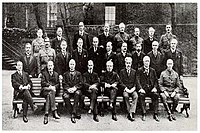
Left: Lalgarh palace built (Indo-Saracenic style) by Ganga Singh in the name of his father, presently a heritage hotel and also residence of the Royal family. Right: Ganga Singh as member of the Imperial War Cabinet


Founded by one of the scions of the house of Jodhpur, Rao Bika. Bikaner, In 1486 and from its small origins it has developed into the fourth largest city in Rajasthan today. The Ganga Canal completed in 1928 and the Indra Gandhi Canal completed in 1987 have allowed the farming of crops such as mustard, cotton, groundnuts, wheat and vegetables. Other industries include wool production and the mining of Gypsum, Plastar of Paris and Bentonite Bikaner's 15th century history combines adventure with enterprise. In later centuries, as an ally of the Mughals and the British, it was able to develop as a modern state, though its architectural attractions remain splendidly Rajput. One of the principal outposts of the desert, its is also a major centre for camel breeding.
Junagarh Fort, Bikaner


Bikaner is 500-year-old town standing still in time. The rulers here built beautiful forts that echo of opulence and images of monsoon clouds in this dry land. The wealth of its architectural heritage lies in its forts, palaces and temples– magnificent creations in red and yellow sandstone, are living.

Here is a temple where rats are held sacred. Today the city is known for flourishing industries of food, wool and camel breeding. The genesis of Bikaner dates back to 1488A.D, when a Rathore prince, Rao Bikaji, son of Rao Jodhaji of Jodhpur, chose a barren wilderness called ’Jangladesh’ and transformed it to a charming city called ’Bikaner’, after the founder’s name. Not only do the traditions come alive here in colourful bazaars and Havelis, but Bikaner is also famous for the best riding camels in the world.

Ever since the foundation of Bikaner till its accession into Indian Union in 1947 A.D. and there after it's integration in Rajasthan state in 30-3-1949 A.D., Bikaner has played a notable role in the history of the country. Bikaner state has produced several able Generals and warriors and distinguished Rulers and just to name of few Raja Rai Singh Ji-One of Akbar's most distinguished Generals. Another famous name is Raja Anup Singh who ascended the throne in AD 1669 a scholar and warrior. His period has been described as "the golden time of Bikaner valor and fame".
DESHNOK 
Sacred Rats, Deshnok, India travel photo
Deshnok is a village 30km south of Bikaner along the Jodhpur road. A visit to Deshnok's fascinating temple of Karni Mata, an incarnation of Durga, is not far for squeamish. Here the holy rodents are considered to be incarnations of the storytellers, and run riot over the temple complex.

Karni Mata lived in the 14th century and performed many miracles during her life-time. When her youngest son, Lakhan, drowned, Karni Mata ordered Yama, the god of Death, to bring him back to life. Yama replied that he was unable to do this, but that Karni Mata, is an incarnation of Durga, could restore Lakhan's life. This she did, and decreed that members of her family would no longer die, but would be incarnated as kabas (rats), and these kabas would returns as members of her family. There are around 600 families in Deshnok who claim both decent from Karni Mata and that they will be reincarnated as kabas.

The temple is an important place of pilgrimage, with pilgrims being disgorged every few minutes from buses. Before the temple, is a beautiful marble facade with solid silver doors donated by Maharaja Gaj Singh. Across the doorway to the inner sanctum are the repousse (raised relief) silver doors - one panel shows the goddess with her holy charges at her feet. An image of goddess is enshrined in the sanctum. There are special holes around the temple courtyard to fascinate the rats' movements, and a wire grille has been placed over the courtyard to prevent the birds of prey and other predators consuming the holy rodents.

It is considered quite auspicious to have a kaba run across your feet. White kabas are quite rare, albeit there are one or two at the temple and sightseeing one augurs well for your spiritual progress.

Junagarh Fort, Bikaner

The fascinating piece of architecture was built between 1588 -1593 AD by Raja Rai Singh (1571 - 1611 AD) , a general in army of Mughal emperor, Akbar. The imposing fort has 986 long wall with 37 bastions and two entrances. The Suraj Pole (Sun Gate) is main entrance to the fort. The palaces within the fort are on the southern side and make a picturesque ensemble of courtyards, balconies, kiosks and windows. 

Lalgarh Palace, Bikaner

The architectural masterpiece in red sandstone, built by Maharaja Ganga Singh (1881 AD-1942 AD) in memory of his father Maharaja Lall Singh between 1902 -1926.This magnificent palace is an example of pure Rajput martial architecture. Designed by Sir Swinton Jacob, this palace has several grand halls, lounges, cupolas and pavilions. The exotic palace has magnificent pillars, richly carved fire mantles , Italian colonnades and motif of lotus in full bloom , adding to the magic of this. 

Gajner Palace, Bikaner

Gajner Palace -a summer resort of Bikaner Maharajas -has often been described as ' an incomparable jewel in the Thar desert'. Built by Maharaja Ganga Singh ji of Bikaner, palace stands on the embankment of a lake .The palace was used by Maharaja for grand shoots and lavish entertainment. Royalty, both Indian as well as international, Viceroys and other dignitaries have been entertained at this grand palace. 

Ganga Golden Jubilee Museum, Bikaner

The museum offers a collection of royal costumes, weapons, ornaments, ancient statues and exquisite paintings, one of which depicts the signing of the Versatile Treaty by Ganga Singh. In addition to this, it also has collection of terracotta from the Gupta period. 
______________________________________________________________________________________________B
ikaner is a nice place to shop. Bikaner, known in the world for it's "BHUJIA & PAPADS", spicy snacks made from fried gram and pulses and also for "RASGULLAS" (a dessert). It has also attained popularity for items stitched out of camel hide which includes belts, wallets, bags, and Jutties (footwear) etc. Government Khadi Emporium at Mahatma Gandhi Road for local blankets, rugs, carpets, wood carvings and lacquer work. Bikaner is a famous centre for embroidery and appliqué work, painted pottery, carpet weaving and delicately carved wooden doors. Bikaner is also famous for a variety of snacks, especially the Bikaneri bhujia.

Thursday, March 17, 2011

Bundi ........ A must visit place of rajasthan.

Sir Rudyard Kipling had commented " The Taragarh Fort at bundi must have been built by angels not by human beings ".
 
This small and rustic town ,once the capital of the erstwhile princely states of Rajasthan,comes alive during its Kajli Teej festival in the month of november.HIGH on a hill in Bundi, enclosed by a mass of greenish brown serpentine stone, Chatramahal is a silent secret garden, its elegant formal layout still visible through the tangle of wild roses and weeds, that is the most enchanted place in the world — quoted by Virginia Fass, renowned photographer, on the romance and fantasy of this place. Bundi (Kipling's destination) is the first stop in the Hadoti region while coming from Jaipur. The pleasant monsoon makes this place even more beautiful and gorgeous. The chain of otherwise barren small hills wearing a green look and with "water water everywhere" makes this place a special monsoon destination and a treat for visitors.

A tiny town picturesque, 36 km from Kota is, Bundi. One of the unexplored cities with a rich historical wealth. Once it was the part of Kota, it was ruled by the Hada Chauhans - an offshoot of the famous Chauhan clan who ruled Delhi and Ajmer.Bundi continues to be a place where life is largely untouched by the outside world. Infact, even today, Bundi is one place in Rajasthan that has a delightfully medieval flavor - visiting it is like stepping into some kind of time warp.


. The town nestles at the foot of a large rocky hill, dominated by Taragarh Fort and Garh Palace.It is a town of numerous ornate step-wells dating back to the 17th century. The tiny, winding lanes of its bazaars are among the most fascinating you will find anywhere in Rajasthan. Bundi miniature paintings are considered to be among the finest in Rajasthan. Reaching there zenith in the 18th century, they are known for their brilliant colors, their elegant sense of design and their masterful technique.
Bundi is also known as the City of Wells for its more than 50 step wells built over the centuries.

The soft silver deluge bathing the banks of the auspicious Chambal presents an exotic setting for the tourist.
The Bundi festival will now be a part of the tourism calendar and an even more popular and important event for the State.

 
Vignettes of Bundi's rich heritage.
Thus the small town of Bundi called the queen of Hadoti in Rajasthan, once famous for its Baories (reservoirs) and Daories (brave ladies) and miniature paintings attracts the traveller. From the highway it seems as if the city is a miniature painting frozen in time.
Bundi also has a wildlife sanctuary and the tiger can be sighted in this season.

In a nutshell, Bundi is an exotic place to see and enjoy. The local people welcome visitors by saying: "Thanko Mhanki Bundi mein swagat Chhe — welcome to our Bundi"

Wednesday, March 16, 2011

'The Mini Khajuraho' Of Rajasthan


Menaal
  
Menaal temple panoramic view
Rajasthan circuit, which encompasses the Western India tourist circuit, boasts of some of the most sought after tourist destinations of this sector.Much have been written about the major destinations like Jaipur, Ajmer, Mount Abu, Jodhpur, Jaisalmer etc., but the area is dotted with numerous resplendent & mesmerizing but node script destinations.Amongst them one is MENAAL, which is about 90 Kms. from Chittaurgarh.

To Menaal, one will have to travel upto Bhilwara or Chittaurgarh.It is advisable that one visits Chittaurgarh as this Fort city boasts of a Rajput fort whose past is replete with historical characters like Rajput King Prithvi Raj Chauhan, Meera Bai (whose Bhakti towards Lord Krishna was absolute & amazing and her poetical renditions in love with Lord Krishna are sung with equal fervour by devouts all over northern India).There are other historical anecdotes associated with this place like the jauhar by famed beauty & queen Rani Padmini to protect her honour from Allaudin Khilji, who had laid siege on this fort for her famed beauty.There are several such instances of valor displayed by Rajput Kings & queens against face of adversity and this place holds a place of pride amongst the Rajputs for its legacy.Interestingly this is the only fort that is referred to in masculine gender by the local Rajputs of Rajasthan & around.
The famed Menaal Temple
Chittaurgarh is accessible both by road & rail.It is situated around 600 odd Kms. from Delhi and regular train services on the Udaipur line is available with journey time of 10 hours upwards.One can make stop-over at Ajmer also as all the trains pass through this holy place.Other than that there is a plethora of bus service available from Delhi and one can even take a chance by standing at Dahula Kuan from where the busses pick up travelers without booking.Apart from the Rajasthan Transport Corporation busses, a large number of private operators like Srinath Travels, Parsavnath Travels etc. also operate busses both of ordinary type as well as deluxe ones.The busses which start from Delhi at around 7.00 P.M. in the evening, reach Chittaurgarh by 9.00 A.M. the next day.Therefore, the visitors have the whole day to themselves for sightseeing etc.The nearest airport is at Udaipur, which is about 120 Kms. from Chittaurgarh.The best period to visit Rajasthan in between late October to early March.For information one can log ontowww.rajasthan.gov.in/CHITTAURGARH.SHTM .There are all kinds of budget as well as quality lodging & boarding facilities like Hotel - Panna, Padmini etc. available at Chittaurgarh.

Menaal is also known as the "mini khajauraho", blessed with natures beauty, this picnic spot is situated on the Chittaur - Bundi raod, and is famous for the ancient temples, waterfalls and beautiful forests. The name Menaal is derived from Maha Nal (great gorge).This temple complex was built by Someshvar Chhahamana and his queen Suhavadevi of the Sakhambari dynasty in the 11th century.The construction of the main structural group, on the left side of the gorge, is credited to the king while the single temple with a detached monastery across the river is associated with the queen, albeit the foundation inscription has been lost now.However, the fame of place grew during reign of King Prithviraj Chauhan, as it was his favourite mountain retreat during the scorching Rajasthan summer. For this he had built a palace on the banks of the Menaal river which runs over granite slabs before finally plunging into a gorge over 122 meters deep. When it rains, the water flows over the granite rocks and plunges into a gorge 100 feet below into a pool and then proceeds onwards.
Apsaras of Menaal
The 11th century Mahanaleshvara temple is a perfect example of the western Indian style of stone temple architecture. The entrance is embellished with a seated stone lion, and there are number of guardian deities carved on protruding panels in the walls. The inner sanctum is dominated by projecting balconies while the roof is a pyramidcal array of ribbed and finely carved stone.The entrance to the mansion is via a two storied gateway carved with images of the gods Ganesha and Bhairava. The square courtyard beyond the entrance houses a huge Shiva temple of stone, built in the ancient Hindu style with a carved pagoda and pillars. The walls of the temple are carved with motifs of Hindu dieties and various other themes, interspersed with images of elephants. of special mention are the images of Shiva and Parvati which form the chief subject of the engravings. Shiva and Parvati are depicted in various postures and surrounded by dancers, musicians, lesser gods and animals. Halfway up the pagoda is a large stone lion, perhaps depicting victory. A number of smaller ruined temples lie around the Shiva temple.Though the main Shiv shrine is built in sand-stone, brick-work is visible wherever the surface of the tower covering of the smaller temples (perhaps even older) has peeled off. Before the main temple ofMahanala is a Nandi enclosure, solidly built, but barely sufficient to accommodate the bull.


Sanctum sanctorum of Menaal temple - note the carved doorways which are akin to the famed Khajuraho temples

Tuesday, March 15, 2011

Mera Pradesh

    
Rajasthan is a state rich in heritage, traditions, palaces, and natural beauty. As the name indicates, it is the land of many great kings and Rajaput warriors. Hindu scriptural epics refer to many sites in the present day Rajasthan.  Pushkar ,the holy pilgrimage site, is mentioned in both the Mahabarata and Ramayana.
The new state of Rajasthan was defined in 1948, encompassing the south and south-eastern states of Rajputana with Udaipur as the capital. It has a total area of 342,214 sq km and is bounded in north and north-west by Pakistan, in the north-east by Punjab and Harayana , in the east by Uttar Pradesh, in the east and south-east by Madhya Pradesh, and in the south-west by Gujrat. Rajasthan has 32 districts with a total population of about 44 million. Hindi , Rajasthani are main languages spoken in the state. Hinduism is the predominant religion and other major religious communities are Muslims,Jains, and Sikhs. Rajasthan is known for its exciting festivals and fairs such as camel, elephant and desert festivals,Baneshwar, Pushkar and Kaila Devi fairs and Dussera mela.
Rajasthan is the driest part of India. The Aravalli ranges stretch diagonally across from the north-east to south-west to separate the desert and semi-desert areas. The Chambal river runs along the eastern boundary. Agriculture is the main source of livelihood and it remains the crucial factor in the economy. but now it is being replaced by travel and tourism ,mining,and handicraft .Rajasthan has large deposits of non-metallic and metallic minerals and ornamental stones including marble, sandstone, Kota stone, Jodhpur stone, Dhaulpur stone, Karoli stone, slate, and granite.
Rajasthan is famous for its traditional handicrafts: gems and jewellery, metal-ware, textiles and embroidery, leather, and marble processing. Main industries are leather, ceramic and glass, wool, electronics and telecommunication.