Saturday, May 21, 2011

Legendry leader who dreamed to lead us to 21st Century


http://static.guim.co.uk/Guardian/world/gallery/2007/may/09/india/HU056298-5036.jpg
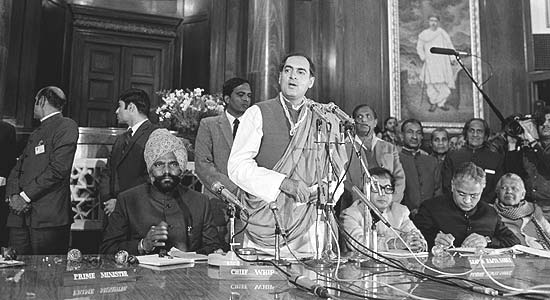
http://www.nutquote.com/thumb/5509-Rajiv_Gandhi.jpgRajiv Gandhi would have been 66 years old  had he lived. He was only 46 years old when he was targeted by a human bomber and killed in the most gruesome manner in Sriperumbudur in Tamil Nadu at a meeting venue, which was not there on his original schedule.
But destiny had other things in store and India’s youngest Prime minister(he was only 40 when he became the PM) died with an unfinished agenda.
The man who brought India on the global cyber map and for whom the dream was to take his country to the 21-st century left much before he could complete his mission. On top of it he had to suffer the humiliation of being accused in the Bofors bribery case. The High Court finally exonerated him some years ago. His widow Sonia Gandhi and son, Rahul who are determined to complete the pending work, are now carrying on his legacy.

son of Indira Gandhi, was the seventh Prime Minister of India from his mother’s death on October 31, 1984 until his resignation on December 2, 1989 following general election defeat. Rajiv was chosen as prime minister by the party leadership within hours of his mother’s assassination. He served as the Prime Minister of India from 1984 to 1989.
Rajiv Gandhi was the one of the dynamic indian prime minster.http://photogallery.indiatimes.com/news/india/remembering-rajiv-gandhi/Remembering-Rajiv-Gandhi/photo/4561473/Remembering-Rajiv-Gandhi.jpg
“I too have a dream. I dream of an India – strong, Independent, self reliant and in the front rank of the nations of the world in the service of mankind.”

Bharat Ratna Rajiv Gandhi India’s late Prime Minister 
said these words once and did everything he could in his short tenure to live up to them. 
Rajiv Gandhi entered politics only after the death of his brother, Sanjay Gandhi, in 1980. Rajiv Gandhi had not shown much interest in politics till then. He attended college at Cambridge, England; married an Italian, Sonia Gandhi; and worked as a pilot for the Indian Airlines.
Rajiv Gandhi won his first parliamentary elections to the Lok Sabha in 1981. At that time, Indira Gandhi was re-elected as the Prime Minister and Rajiv Gandhi became her unofficial political advisor. But in 1984, Indira Gandhi's bodyguards assassinated her and Rajiv Gandhi took over as the head of the Congress party and was sworn in as the Prime Minister.
His government encouraged foreign investment, and industry boomed with the loosening of business controls. He sought to increase Indian investments in modern technology. He removed many restrictions on imports and encouraged foreign investment. His critics claim that he was indecisive as he changed his cabinet members frequently. He fired his mother's aides and instead appointed his friends and technocrats. In 1987, he committed the Indian Peace Keeping Force (IPKF) to Sri Lanka in an endeavor to help the government there eradicate militants agitating for a separate Tamil homeland. Though one of the campaign promises of the Congress party was to eliminate corruption in politics, Rajiv Gandhi's tenure as Prime Minister was marred by allegations of corruption. He was accused of receiving "kick-backs" from a Swedish company manufacturing Bofors machine-guns.
In elections in November 1989 Gandhi won his seat, but the Congress Party lost its majority and he resigned as prime minister. He and his party's implications in corruption scandals decreased their credibility as a strong party.
Rajiv GandhiRajiv Gandhi began to campaign again in 1991. It was while he was campaigning in Tamil Nadu in south India that a Tamil sucide bomber took his life. They said that it was revenge for intervening in Sri Lanka's politics.
In 1998, 26 members of a separatist guerrilla group known as the Liberation Tigers of Tamil Eelam were convicted of Gandhi's murder and sentenced to death.
And in 1999, Rajiv Gandhi was posthumously charged with participating in a kickback scheme in a Bofors arms deal.

Today in academic circles it is often wondered as to who really was the architect of modern India, Jawaharlal Nehru who was India’s first Prime Minister and who gave this nation an industrial backbone or Rajiv Gandhi his grandson, who foresaw the satellite revolution, the coming of the information age and the importance of IT much before his contemporaries – and showed the countries’ Industry how to stand and face competition. The wonders India has worked today in the IT sector would not have been possible without him. His modernization of the economy, his vision of the future and his innovations are hailed today by all and sundry. 
Rajiv brought to India a new light and created a new road for the country to follow.
http://static.guim.co.uk/Guardian/world/gallery/2007/may/09/india/U00653AACME-420.jpg
http://anilm365.files.wordpress.com/2008/10/rajiv-nehru-and-indira.jpg?w=500
http://cms.outlookindia.com/images/articles/outlookindia/2009/10/19/rajiv_gandhi_20091019.jpg

Friday, May 20, 2011

The Nuisance Neighbour

The noisy, contentious and often childish public debate in India and Pakistan, after the United States caught Osama bin Laden, further proves how oblivious strategic analysts on both sides of the border are of the fundamental importance that economics has for a country’s dynamics. However successfully Pakistani spokesmen may brazen it out, and however frustrated Indians may be over their inability to stop Pakistan from exporting terrorism, the hard fact is that Pakistan is losing ground, year after year, month after month.


Most Pakistanis would not be aware that the yield on their government’s 10-year bonds, at 14.1 per cent, is the second highest in the world. This is next to bankrupt Greece (15.7 per cent). That indicates how bleak the markets’ assessment of Pakistan’s economic future is. What is more, the country’s inflation rate (at 12.9 per cent) is the fifth highest in the world. The economic growth rate is abysmal, averaging 3.5 per cent in the last three years, when population growth has been 2.1 per cent. Annual growth of per capita income, therefore, is about 1.4 per cent — less than one-fourth that of India


Pakistan’s sustained under-performance has meant that its economy is now only one-ninth that of India; it used to be one-seventh. At one point, its per capita income was noticeably higher than India’s; now it is 20 per cent lower. Project these trends into the future and it should be clear that Pakistan will find it increasingly difficult to sustain its position as a strategic challenger to India; it will simply not have the money or the technology or the industrial prowess. That does not mean it will cease to be a nuisance; a number of semi-failed states are an international nuisance, and Pakistan has its nukes as well as China’s backing


The question that Pakistanis should be asking themselves is not whether they can trouble India (they can, in the foreseeable future, if that is what gives them satisfaction) but how they think they will be the winners in that game, considering that all they have achieved so far is to score self-goals. They can continue with their stand on Kashmir, perpetuate a sense of victimhood vis-a-vis the US, seek strategic depth in Afghanistan, and treat the army as the country’s strongest institution. But if the instruments for achieving key national goals are the Hafiz Saeeds and Maulana Masood Azhars of the world, not to mention the Taliban, it will not only reflect poorly on Pakistanis but also deliver more self-goals to a deeply challenged society and an economy that survives on international largesse.

Thursday, May 19, 2011

आपणी मायड़भासा राजस्थानी

भाषा साहित्य मिनख-मिनख नै जोड़ै, देस री एकता रै वास्तै भासा अेक जरियो बणै, आ बात कैई जा सकै। जियां’क विदेसियां रै आक्रमण सूं जद आपणै देस रो जन, या कैवां कै म्है लोग जद त्रस्त हुईग्या हा, बीं बखत साहित्यकार जगत जिकी एकता रो दरसण आपणी कलम सूं करायो, बा बात कोई दो-चार सताब्दियां में भी भूलीजणी आसान कोनी |
आपरी निजर है कीं भासा तणी बोलियां। उड़िया-24, बंगाली-15, पंजाबी-29, गुजराती-27, नेपाली-6, तमिल-22, तेलगु-36, कन्नड़-32, मलयालम-14, मराठी-65, कोंकणी-16, हिन्दी-43, अंग्रेजी-57 अर आपणी राजस्थानी में 73 बोलियां। अब बताओ दिखांण कुणसी भासा लूंठी? किणी भासा रो सबदकोस बोलियां रै सबदां री भेळप सूं सामरथवान बणै। जकी भासा में बोलियां कम। उणरो सबदकोस छोटो। आपणी मायड़भासा राजस्थानी रो सबदकोस दुनिया रो सै सूं मोटो। राजस्थानी भासा में एक एक सबद रा 500-500 पर्यायवाची। एक सबद रा इत्ता पर्यायवाची किणी भासा में नीं लाधै। भासा विग्यानी जार्ज ग्रियर्सन 'लिग्विस्टिक सर्वे ऑफ इंडिया' में, डॉ. एल.पी. टेस्सीटोरी 'इंडियन एंटीक्यूवेरी' में अर डॉ. सुनीतिकुमार चटर्जी 'पुराणी राजस्थानी' में राजस्थानी नै दुनिया में सैसूं बेसी ठरकै आळी भासा बताई है।
आपणै पड़ोसी पंजाब नै ल्यो। पंजाब री राजभासा पंजाबी। पंजाबी में पटियाळवी, दोआबी, होशियारपुरी, मलवई, मांझी, निहंगी, भटियाणी, पोवाधि, राठी, गुरमुखी, सरायकी आद 29 बोलियां। पण बठै जका राजकाज रा दफ्तरी हुकम, अखबार-पत्रिकावां अर भणाई री पोथ्यां निकळै, बै एक इज भासा में निकळै। बा है मानक पंजाबी। राज रा हुकम सूं ई किणी भासा रो मानक थरपीजै। इकसार कायदो बणै। जकै दिन आपणी राजस्थानी राजकाज री भासा थरपीजसी। उण दिन मानक राजस्थानी भी थरपीजसी। सगळै दफ्तरां, अखबारां, पत्रिकावां अर पोसाळां री पोथ्यां में एक ई भासा चालसी। बा होसी मानक राजस्थानी। जद तक ओ काम नीं होवै, बठै तक लोग आप-आपरी बोली में लिखै। इण में हरज भी नीं है। अब देखो, पंजाब रै हर अंचल में न्यारी-न्यारी बोलियां बोलीजै। पण विधानसभा, कोट-कचे़ड्यां, पोसाळां, जगत-पोसाळां अर अखबार-पत्रिकावां में राज री थरपियोड़ी मानक पंजाबी ई बपराइजै। पंजाब रै भी हरेक लेखक री भासा में उणरै अंचल री महक भी आयबो करै। आवणी जरूरी है। इणसूं भासा रो फुटरापो बधै।
राजस्थानी में भी मेवाड़ी, ढूंढाड़ी, मेवाती, वागड़ी, हाड़ोती, भीली, ब्रज अर मारवाड़ी समेत 73 बोलियां। आं सगळी बोलियां नै भेळ'र ई राजस्थानी भासा बणै। जकी भासा में जित्ती बेसी बोलियां, बित्ता ई क्रिया रूप। क्रिया विशेषण, कारक। विशेषण पर्यायवाची होया करै। हिन्दी में 'है' होवै, पण राजस्थानी में 'है', 'सै', 'छै', 'छ' आद कई रूप। हिन्दी में आपां कैवां- आपका। पण राजस्थानी में आपरो, आपनो, आपजो अर आपगो मिलै। राजस्थानी में कई जग्यां 'स' नै 'ह' बोलै। जियां साग नै हाग। सूतळी नै हूतळी। सीसी नै हीही। सासू नै हाहू। सात नै हात। अर सीरै नै हीरो। 

Wednesday, May 18, 2011

खेती का अर्थशास्त्र


हम यह मानते रहे हैं कि जैविक खेती और इसके उत्पाद सीधे खेत और किसानों से हमारी रसोई में आयेंगे परन्तु अब यह सच नहीं है. जैसे-जैसे यह तर्क स्थापित हुआ है कि हमें यानी उपभोक्ता को साफ और रसायनमुक्त भोजन चाहिये; वैसे-वैसे देश और दुनिया में बड़ी और भीमकाय बहुराष्ट्रीय कम्पनियों ने जैविक खेती और जैविक उत्पादों के व्यापार को अपने कब्जे में लेना शुरू कर दिया.
भारत में पारम्परिक रूप से जैविक उत्पाद सामान्यतः सीधे खेतों से लोगों तक पहुंचे हैं. हमारे यहां हाईब्रिड और देशी टमाटर या लोकल लौकी जैसे शब्दों के साथ ये उत्पाद बाजार में आते रहे हैं पर अब बड़ी कम्पनियों ने इस संभावित बाजार पर अपना नियंत्रण जमाना शुरू कर दिया है. तर्क यह दिया जा रहा है कि जितने बड़े पैमाने पर आधुनिक खेती में रसायनों का उपयोग किया जा रहा है; उसके खतरे को देखते हुये यह सवाल महत्वपूर्ण नहीं है कि उसका मालिकाना हक किसके पास है. पर इसके दूसरी तरफ हमें यह कभी नहीं भूलना चाहिये कि आज की सबसे बड़ी जरूरत यह तय करने की है कि अनाज, खाद्यान्न और भोजन के उत्पादन का तंत्र और व्यवस्था पारदर्शी ही होना चाहिये. 

ये कम्पनियाँ बार-बार ऐसे बीज विकसित करती हैं, जिनसे होने वाली पैदावार से अगली बुआई या फसल के लिए उत्पादक बीज नहीं मिल सकते है. मतलब कि हर फसल के समय किसान को एक ख़ास कंपनी के बीज खरीदने पड़ेंगे. उन्होंने ऐसी व्यवस्था भी विकसित कर ली है कि एक ख़ास कंपनी के बीजों पर उसके द्वारा बनाए जाने वाले कीटनाशक और उर्वरक ही प्रभावी होंगे. मतलब साफ़ है कि किसान पूरी तरह से एक कंपनी का बंधुआ होगा. और नयी नीति में सरकार ने इस बन्धुआपन की पूरी तैयारी कर दी है. 

सरकार ईमानदार नहीं है इसीलिए तो उसने देश में कृषि शिक्षा को बढ़ावा नहीं दिया. यही कारण है कि वह देश के किसानों के विज्ञान से ज्यादा कंपनियों के लाभ को ज्यादा महत्वपूर्ण मानती है, इसीलिए तो वह अनाज व्यापार के लिए उगाना चाहती है स्वाबलंबन और खाद्य सुरक्षा के लिए नहीं. सरकार ने भारत में तो कृषि पर रियायत कम कर दी, बिजली, उर्वरक, कीटनाशक महंगे हो गए और किसान बाज़ार में आयातित कपास से मार खा गया. विदर्भ में किसानों ने इसीलिए आत्महत्या की है. इसीलिये तो वह देश में कुपोषण और भुखमरी होने के बावजूद देश का अनाज निर्यात करती है या समुद्र में डुबो देती है. इसलिए तो वह यह जानते हुए कि 10 लाख टन अनाज गोदामों में सड़ रहा है पर देश के के लोगों में नहीं बांटती है. सरकार ईमानदार है. 

Tuesday, May 17, 2011

I got a hole in my pocket

There is remarkable congruence between the aam aadmi and the world's elite gazing at India  when it comes to their most important concern about this country inflation and not corruption, is their number 1 priority.The nine per cent GDP growth envisaged for the financial year 2011-12 may remain a pipe dream unless the problem of rising prices is tackled, feel economists. 
THE BURGEONING middle class of India has been one of the main driving forces behind the rapid growth of the country's economy in recent years.However the expansion of the Indian middle class is now under threat because of a steep rise in inflation, which could hold back the enlargement of the key social group both in the short and longer term.Its large middle class population - amounting to around 200m in about 50m households, most of them with a single income earner - have become big end-users of chemicals through their purchases of housing, household items, automobiles and personal care products.


With the impetus coming mainly from higher oil prices and soaring prices for imported food, inflation is now at its highest for 13 years and double the target level set by the RBI, the central bank.
Double-digit inflation is unusual in the Indian economy, with the rate going above 10% only in the early 1990s and in 1994-95. Now, economists predict, it will remain in double figures for the rest of the year.

The sharp increase in prices, together with higher interest rates, is hitting lower income groups hardest but there will also be an immediate impact on the spending power of the middle class, which has provided the foundation for the boom in the consumer market.
India's stock market has fallen this year on fears that high inflation will scare off foreign investors.
Wages in India are also rising as workers demand pay that keeps up with the cost of living.

 
The prices of basic commodities like fuel, food, education and the interest rates on loans for durables are going up.
The average Indian is now paying more on their loans as the interest rates on home loans, As such, the middle class cannot afford those goods that they had previously been able to," . It will adversely affect lifestyle.

Improving productivity,slow the wage growth by increasing labour pool,Make sure and crub corruptions of all form,agriculture reforms are some steps to cut inflation .

Monday, May 16, 2011

Should we relay on THEM !!.......................................Fakeing brutally

In India , extra judicial killings by the police or the security forces are called encounter killings,meaning that the killing occured during the armed encounter between the police /security forces and the victim.The killing by the state forces is more often declared to be offensive,cases of attempted murder and other related offenses are regestered against the victims and the cases closed without further investigations since criminal cases come to an end after the victims death,despite unnatural .

Since October 1993, 2560 cases of police encounters have been brought into the notice of National Human Rights Commission (NHRC). Of them, according to the NHRC, 1224 cases have been found fake encounters. It means that roughly every second police encounter is fake in the country. The information has been accessed by eminent RTI activist Afroz Alam Sahil after several attempts. Sahil recently came into limelight for securing the autopsy report of Batla House encounter victims.
Another interesting point the data reveals is that of 1224 fake encounters, the NHRC ordered for compensation in only 16 cases.
The petitioner filed a fresh application on 02/03/2009 and asked 7 questions including: Since October 1993, how many cases of fake encounters, communal riots/caste violence, death in police custody, exploitation of women and exploitation of Dalit have come before the commission. In how many of them public servants were found guilty. How many of them were disposed of or found wrong. And the case number of fake encounters in which NHRC has given compensation.
The reply he got from NHRC in October 2009 after taking numerous rounds of the Commission office was revealing. Since October 1993 there were 1224 fake encounters in the country. 
Fake encounters 1224
Communal riots/caste violence 432
Death in police custody 2320
Exploitation of women 4502
Exploitation of Dalit 17998
The NHRC said that out of the above, in 224 cases, the Commission found violation of human rights by public servants. The Commission had disposed of a total of 16784 such cases where no finding/positive recommendation in respect of proven violation of human rights was made.

Sunday, May 15, 2011

The Mahiyaria ...whom we are proud of ...


 When Rana Sangram Singh popularly known as Rana Sanga was the ruler of chittorgarh from 1509 to 1527 .He once went to aakhet where an elephent lost his temper and ran towards rana sanga seeing this Haridass mahiyaria who was also accompaning the maharana remembered her sister devi sundar baisa ,atonce the elephant turned around and everyone was safe.after coming to fort Rana Sanga told everyone that in the jungle he saw a hand on the elephants head and thats the moment he got saved .On knowing that it was the hand of non other that "Sundar maa" rana sanga offered Haridasji Mahiyaria to act as rular of Mewar for three days as reward and gave jageer of "Panchli village".Sundar baisa and her hands are worshipped by "Mahiyaria" till today .The main temple is at "Bhildi" in Bhilwara dist.The pond there have miracle and can cure skin desises.
                                   
Kaviwar NathuSingh Mahiyaria was know to be among one of the best poets in the court of Mewar.He had written ample number of Dohaas,Sorathas ect in Dingal . His books Karni Shatak,Vir Satsai,Chunda Shatak,Haadi Shatak,Jhalamaan Shatak are still admired, Dr.Rajender Prasad the first president of India was one of the great admirer of kaviwar .When India got independence,elections were commenced . It was a coincidence that when Kaviwar Nathusingh Mahiyaria was going to cast his vote ,the then Maharana Bhagwat Singh Ji was comming out of the room after casting his vote .Showing the spot of ink on his finger he asked kavivar to comment something on the occation .Charan kavi Nathusingh ji Mahiyaria with his brillience said "Andaagal Chetak rayo,Andaagal Hindbhaan,vota main shamil wheh dagal huai mahran".  HINDUBHAN HERE MEANS HINDU+ BHAN THAT MEANS HIND+SURYA THIS WAS SAID FOR MAHARNA PRATAP.